
When you live in the “Queen City of the South,” your home is your sanctuary. Whether you are overlooking the skyline from a condo in Cebu IT Park or enjoying the sea breeze in a beachfront villa in Mactan, your furniture takes center stage. However, the tropical climate of Cebu—characterized by high humidity, intense heat, and salt air—poses a unique set of challenges for any homeowner.
At Dr Sofa, we have spent years mastering the art of custom furniture and upholstery specifically for the Philippine environment. We know that a sofa that works in a dry, temperate climate will fail here within months if the fabric isn’t chosen with care.
In this exhaustive guide, we will explore why fabric choice is the single most important decision you will make for your furniture, which materials stand up to the Cebu heat, and how Dr Sofa ensures your investment lasts for decades.
1. Understanding the Enemy: Cebu’s Tropical Microclimates
Before picking a color or pattern, we must understand the environmental factors at play in Cebu.
The Humidity Factor
Cebu’s average humidity levels rarely drop below 70%. For furniture, this is a critical statistic. High humidity means that organic fibers can absorb moisture from the air. If the fabric doesn’t breathe, that moisture stays trapped between the foam and the textile, leading to:
- Musty Odors: That “old basement” smell that is hard to get rid of.
- Mildew and Mold: Visible spotting that can ruin the aesthetic and health profile of your home.
- Fiber Breakdown: Constant dampness weakens threads, leading to premature tearing.
The UV Challenge
With the Philippine sun being one of the strongest in Southeast Asia, UV degradation is a major concern. Many modern Cebuano homes feature floor-to-ceiling glass windows to capture the beautiful views of the Visayan Sea. While stunning, this creates a “greenhouse effect” that acts as a laser on your upholstery. Without UV-resistant fabrics, a vibrant navy sofa can turn a dull, patchy grey in less than a year.
The Salt Air (Coastal Living)
For those living in Lapu-Lapu or along the South Road Properties (SRP), the salt content in the air is significantly higher. Salt is abrasive. It settles into fabric fibers and acts like tiny sandpaper every time you sit down.
2. Top Fabric Recommendations for Dr Sofa Clients
Based on our experience at Dr Sofa, we categorize the best fabrics into three main groups: The Naturals, The High-Performance Synthetics, and The Blends.
A. The Reign of Natural Linen
Linen is the gold standard for tropical luxury. Derived from the flax plant, it is one of the oldest and most respected textiles in the world.
- Breathability: Linen fibers are hollow, allowing air and moisture to circulate freely. It stays cool to the touch even when the AC is off.
- Antimicrobial Properties: It is naturally resistant to bacteria and mold, making it the healthiest choice for humid environments like Mandaue City.
- The Dr Sofa Touch: We often recommend “stonewashed” linens for a relaxed, coastal vibe that fits the Cebu lifestyle perfectly.
B. Heavy-Duty Cotton Canvas
Cotton is a staple in the Philippines for a reason. It is hypoallergenic and incredibly soft.
- Cooling Effect: Cotton doesn’t trap body heat, which is essential when you’re lounging during a hot Cebu afternoon.
- Durability: A high-weight cotton canvas is tough enough to handle daily use by families and pets.
- Maintenance: Many of our custom Dr Sofa cotton covers are designed to be removable and washable.
C. Solution-Dyed Acrylics (Performance Fabrics)
Brands like Sunbrella have changed the game for Cebuano homeowners. Originally used for yacht sails and outdoor umbrellas, these fabrics are now soft enough for your indoor living room.
- UV Resistance: Unlike traditional fabrics where the color is printed on top, these fibers are dyed all the way through (like a carrot vs. a radish). They are virtually impossible to fade.
- Stain Resistance: Spilled some lechon sauce or coffee? Performance fabrics allow you to wipe away messes with ease.
3. Fabrics to Avoid in the Philippines
While they might look beautiful in a European design magazine, the following materials often struggle in the Cebu heat:
- High-Pile Velvet: While trendy, traditional velvet acts like an insulator. It traps heat and can feel “sticky” against the skin in 32°C weather.
- Genuine Leather (In Non-AC Rooms): Genuine leather is skin. Without constant climate control, it can “sweat” or develop mold in the crevices. If you love the look of leather, ask Dr Sofa about our high-grade breathable faux-leathers or top-grain leathers treated for tropical use.
- Low-Grade Polyester: Many mass-produced sofas use cheap polyester that has zero breathability. It creates a “plastic bag” feel that is deeply uncomfortable in the tropics.
4. The Dr Sofa Craftsmanship: What’s Under the Fabric?
A great fabric is only as good as the frame and foam beneath it. When you order from Dr Sofa, we ensure the internal components are also climate-ready.
- Kiln-Dried Hardwood: We use wood that has been properly treated to ensure it doesn’t warp or attract termites—a common issue in local Cebuano homes.
- High-Density Anti-Bacterial Foam: We use foam that resists sagging and is treated to prevent the growth of fungi within the sofa’s core.
5. Design Trends for the Cebuano Home
Selecting a fabric is also an aesthetic choice. Here are the top three styles currently trending in the Cebu furniture scene:
Tropical Modernism
This style uses neutral linens (beiges, sands, and off-whites) paired with wooden accents. It reflects the natural light and makes even small condos feel airy and spacious.
The “Mactan Blue” Palette
Inspired by the surrounding waters, deep navy and teal performance fabrics are highly popular. They provide a pop of color while being practical enough to hide small bits of dust or wear.
Botanical Textures
Textured weaves that mimic the look of abaca or rattan but provide the comfort of soft fabric are a hit for those wanting a “resort-at-home” feel.
6. How to Maintain Your Upholstery in Cebu
To ensure your Dr Sofa piece reaches its 10 or 20-year milestone, follow these maintenance tips tailored for the local environment:
- The “Friday Vacuum”: Weekly vacuuming is vital. Dust in Cebu can be gritty; when it settles into fibers, it acts as an abrasive that wears the fabric down.
- Dehumidification: On particularly “sticky” days during the rainy season, running a dehumidifier or the “Dry” mode on your AC can protect the integrity of your sofa’s internal frame.
- Rotation: If your sofa sits near a window, rotate the cushions every two weeks to ensure any UV exposure is evenly distributed, preventing “sun spots.”
7. Why Choose Dr Sofa for Your Next Project?
At Dr Sofa, we aren’t just selling furniture; we are providing a local solution to a local problem. We understand that a sofa in Cebu isn’t just a place to sit—it’s where the family gathers for Sunday dinner, where you relax after a long day at the office, and a centerpiece of your home’s value.
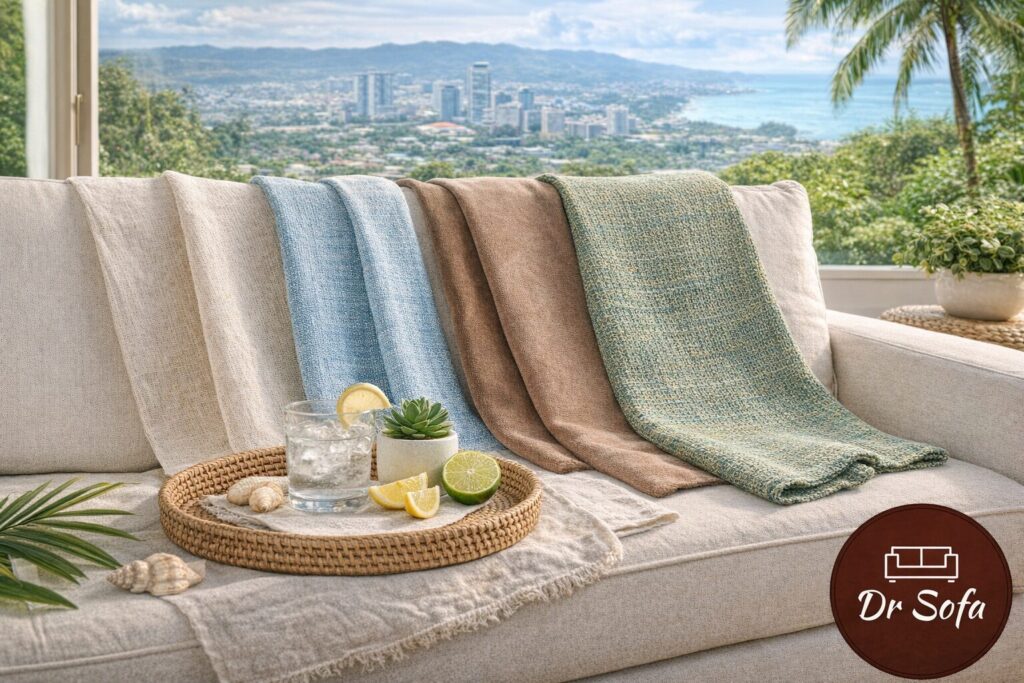
Our team in Mandaue City is ready to show you our curated selection of tropical-tested fabrics. From swatches of Italian linen to the latest in stain-proof technology, we bring the world’s best materials to the heart of Cebu.
FAQ: Frequently Asked Questions about Sofa Fabrics in Cebu
Q: Is linen too hard to maintain? A: Not at all! While it wrinkles, that is part of its charm. For a crisper look, we offer linen-polyester blends that give you the cooling benefits with more structure.
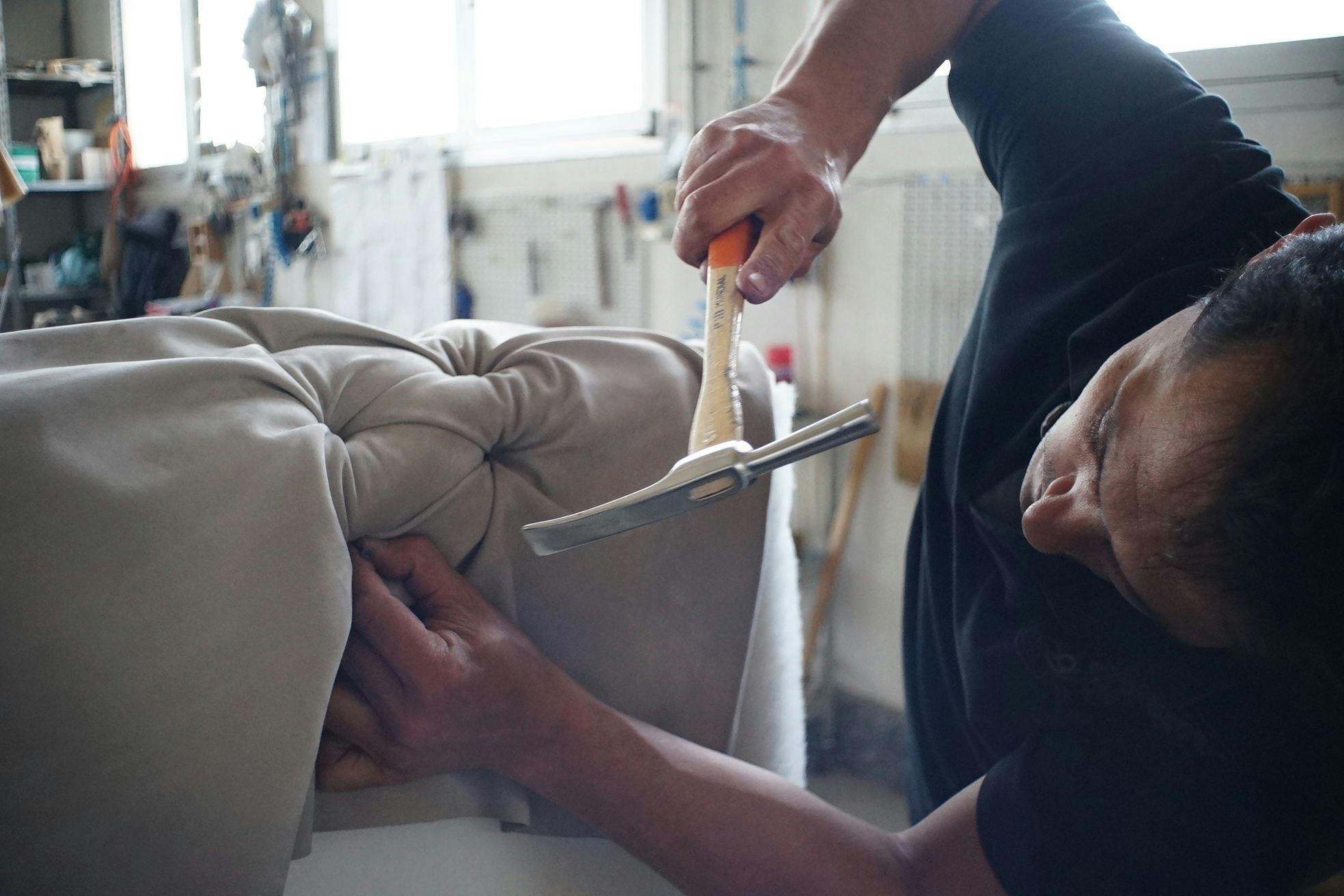
Q: Can Dr Sofa reupholster my existing sofa with these fabrics? A: Yes! Our expert upholstery service can take your tired, worn-out sofa and strip it down to the frame, replacing the foam and fabric with climate-appropriate materials.
Q: Where can I see these fabrics in person? A: You can visit our workshop at Alpa Centrum, Subangdaku or check out our portfolio on facebook to see our latest installations across the island.
Conclusion
Your home in Cebu deserves furniture that can stand up to the elements without sacrificing an ounce of style. By choosing breathable, UV-resistant, and high-quality fabrics, you are ensuring that your living room remains a comfortable haven for years to come.
Don’t settle for mass-produced furniture that wasn’t built for the tropics. Trust the experts who know the island best.